
Between 1959 and 1983 the Heriots Sub-Aqua Club enabled pupils to explore underwater life in Scotland and further afield.
Club members carried out pioneering marine biological surveys in Scotland and the Canary Islands after learning to use scuba diving equipment in the school swimming pool.
Ian Maxwell has collected information from former members, school magazine reports and other sources to present this account of a unique and pioneering Heriot activity.
School pupils joined the club tempted by the chance to go scuba diving like Jacques Cousteau. Getting changed in December snow showers in the car park at St Abbs didn’t quite match up to the coral reef adventures in “Silent World”, but it was still magic to be able to swim weightlessly through kelp forests and watch sea anemones and fish in their own habitat.
Why was such an unusual activity carried out at Heriots?
ORIGINS OF THE SUB-AQUA GROUP
The story starts in 1959, when the Herioter report from the Natural History Society mentioned that: “… The star event of the session was the formation of a Sub-Aqua Group in the society and at its first meeting there was an attendance of 19. Weekly training sessions and talks are now held, which will culminate in a fortnight’s expedition to Gairloch in August.”
Gairloch was the first destination in an underwater journey which lasted 24 years. Expeditions went to Skye, Muck, Eilan Nan Ron, Ailsa Craig, Oban, Ullapool and Cornwall as well as regular weekend visits to Dunbar, St Abbs, Eyemouth, Loch Long and other closer dive sites.
Even more ambitious were the scientific expeditions to the Canary Islands in 1965,1967 and 1969, exploring marine flora and fauna on Lanzarote, La Palma, Gomera and Hierro Islands.
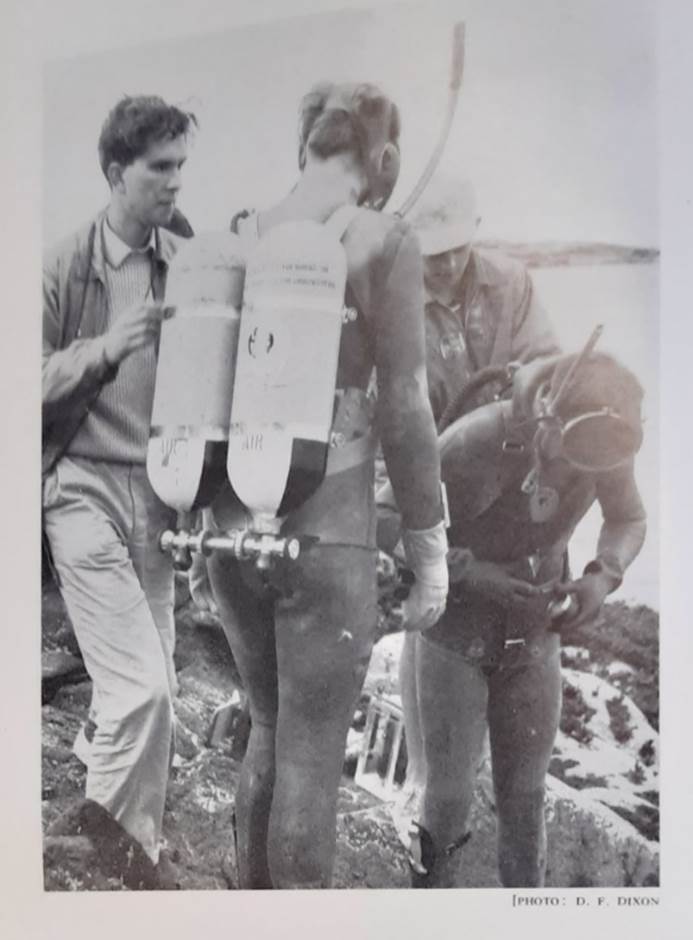
The group was started by Cliff Johnston, a former pupil who was a marine biologist at Heriot Watt University, assisted by two teachers, Mr Barr and Mr Welton. Although other teachers were associated with the group during the following years, the main leadership continued to come from former pupils. Dr Dewar took what was described as a benign and helpful interest in the group from the outset.
As well as starting the whole process, Cliff was a mentor, always keen to encourage and extremely supportive of anyone going through a difficult time. He displayed a rare generosity of spirit and exceptional leadership qualities, achieving that difficult balance between fun and safety, harnessing the raw energy of teenagers and channelling it towards positive ends. Divers remembered their impatience on the shore, kitted and ready to go but waiting for his final safety checks.
Sub-aqua diving was made possible for amateurs after Cousteau had developed the aqualung and demand valve in the 1940s. Both British and Scottish Sub Aqua Clubs were founded in 1953, supporting the growing numbers of sport divers using this new equipment.
By 1960 it was feasible for a school club to use aqualungs to spend more time underwater than was possible with breath-holding snorkel diving. Training nights in the school swimming pool were used to practice techniques like duck diving, clearing a flooded mask, swimming using fins and, eventually, using the aqualung.
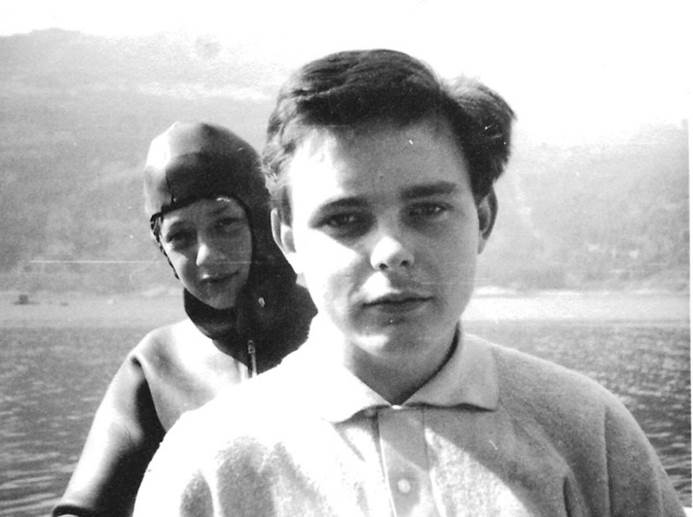
The training programme also had to cover potential problems, like sharing a demand valve between two divers, signalling underwater and lifesaving rescue tows. Members also had to attend diving theory lectures in order to understand how their equipment worked.
The December 1960 Herioter report notes that as well as carrying out training of pupils for underwater swimming activity, the group also covers marine biology, spearfishing and underwater photography. “…The formation of the group has aroused considerable interest outside the school, so much so that the group has had visits from a leading naval diver and university lecturers.”
In 1962 the Edinburgh Evening News carried an article about the work of the group.

EXPEDITIONS AND RESEARCH ACTIVITY
From the outset there was a focus on marine biology. The December 1960 Herioter report notes: “The biological section has been very active, especially in the last few months, being in contact with a research establishment in England and the museum in Edinburgh. The latest field of work in marine biology is the mapping of Scottish sponges for a government research station.”
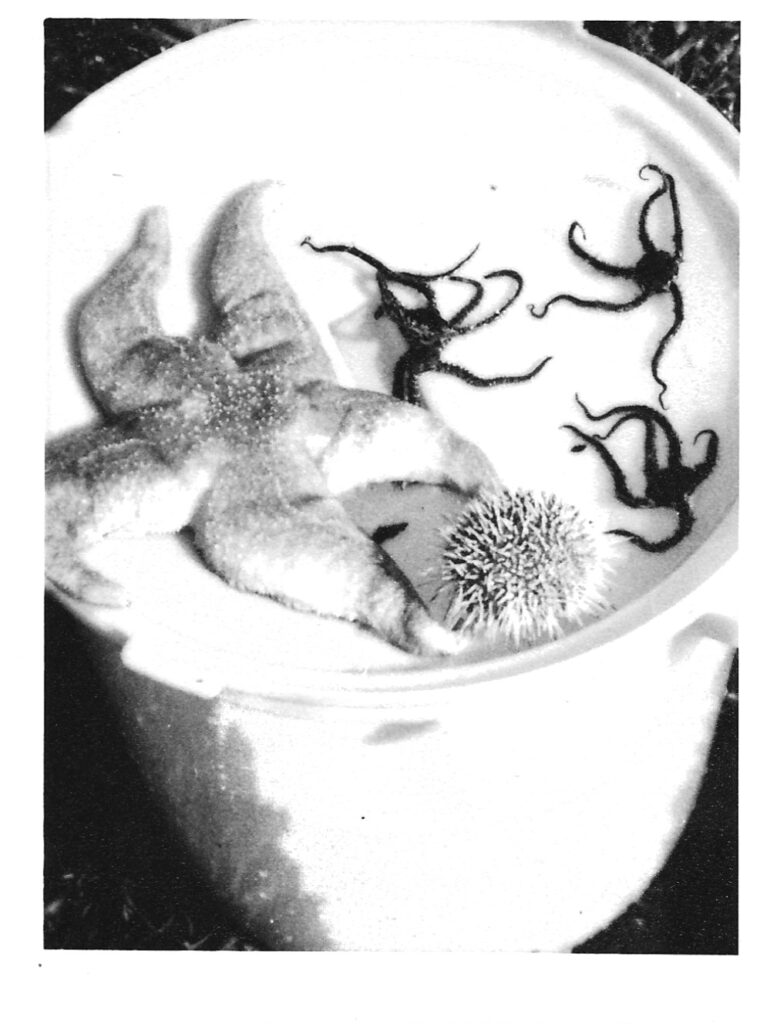
As well as mounting longer expeditions further afield, the sub-aqua group made regular day trips to dive along the Berwickshire coast and sometimes as far as Loch Long on the west coast.

The group started to submit marine animals to the aquarium at Edinburgh Zoo as well as for a tank in the school. One of the more impressive specimens was an angler fish acquired in the harbour at Portree, but it was probably already suffering from its removal from its deep-water habitat and didn’t survive.
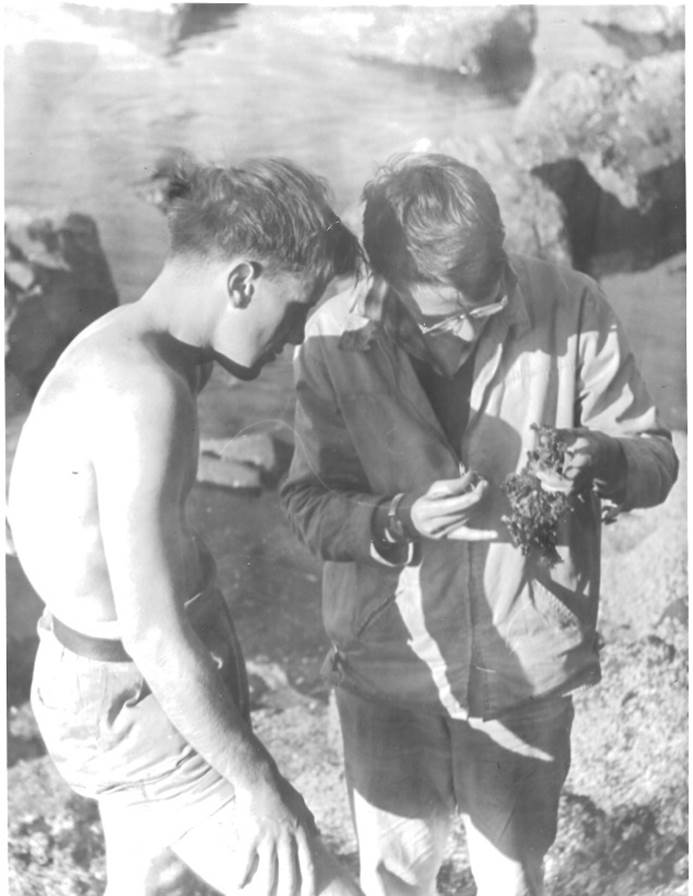
Their film “Underwater Naturalists” was accepted by the Scottish Film Council in 1962 for showing to other schools. That year the main expedition was to Skye, staying in Staffin Youth Hostel. Although this allowed for more specimen collection, the poor weather that summer restricted the amount of filming. Perhaps because of that frustration, some of the divers spearfished for salmon in the river near the hostel – neither the activity or the method was legal.
EQUIPMENT
Once the group had been established for a few years some club members bought neoprene wetsuits to make the diving more comfortable, but others took the plunge without wetsuits, a very brave option in Scottish waters. In those days wetsuits were purchased in kit form and then stuck together using rubber cement. The neoprene was fairly thin and not lined, so lots of talcum powder was necessary to pull on the tight suit. Even with a well-fitting wetsuit it was still very cold when the sea water flowed into the suit. Vigorous swimming activity warmed the trapped water giving the diver anything up to an hour’s worth of comfort before the cold penetrated. If the wetsuit you were borrowing wasn’t such a good fit or was already wet from the previous user or if there was the slightest flaw in the rubber cement then the dive was far shorter.
One of the other main problems for the novice diver was to work out what amount of lead weight was needed to compensate for the buoyancy of the wetsuit. Too much weight and you had to struggle valiantly to avoid sinking without trace. The more frequent problem was having too little weight which led to an embarrassing wallow at the surface rather than a smooth descent to the depths.
Enterprising members of the club started making their own weights using a mould and molten lead. When money was being raised to buy a compressor for the club so that we could fill our own cylinders with air, we started selling lead weights to the Lillywhites shop in Princes Street, who were the main suppliers of diving equipment in Edinburgh at that time. The origin of some of the scrap lead that we used was never publicised, nor was the fact that we were melting the lead on school premises.

The weights weren’t listed in the Lillywhites equipment catalogue, but it does give the 1972 prices of other kit, such as £1.15 for a snorkel, £3.70 for a mask and £24.25 for a demand valve. Air compressors ranged in price from £298 to £782 and 5.5 inch steel air cylinders were £25. Neoprene lined wetsuits from Lillywhites were a pricey £41.55 so we made our own wetsuits from unlined neoprene kits that came cut out but had to be stuck together with glue.
ACCOMMODATION
Finding suitable places to stay on diving expeditions was sometimes problematic. On the summer 1964 expedition to the West Coast of Eilean Nan Ron, morale was extremely high despite the poor weather and force 9 gales which turned the holiday into something of a survival course. The gales created havoc in the tents and participants were forced to repair an old cottage with driftwood rafters and a plastic roof. This cottage saved the day as they then had dry quarters in which to cook and eat.
After an unduly cold March the Easter 1969 Expedition to Ailsa Craig lost much of its appeal. For the uninitiated this barren hunk of granite is situated at the mouth of the Firth of Clyde, about 10 miles west of Girvan. It is also open to the full force of the Atlantic, as they were to discover to their cost. The expedition arrived on a wonderfully calm day and no time was lost in setting up camp. The three lighthouse men on the island told them jokingly of roofs of buildings being ripped off, at which they laughed rather innocently.
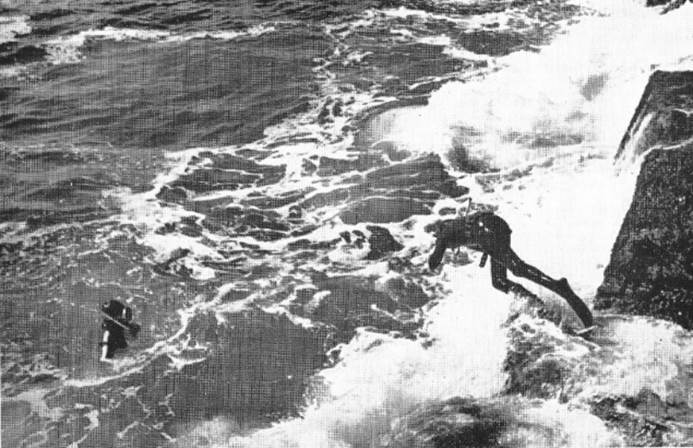
The aim of the expedition was to attempt a survey of the island, and the first six days were filled with the feverish haste. The seventh day dawned to show rather poor conditions for diving. The wind had sprung up and consequently the visibility was poor. The diving that day was very unenthusiastic.
That night the wind blew in earnest. Tents went, roofs went, and only by lying flat on the ground did the expedition members escape being whisked towards the mainland. After this night of Force 10 winds, they spent another miserable 24 hours during which food had to be rationed as the boat could not reach them.
Subsequent expeditions to places such as Oban, Ullapool or Cornwall tended to stay in youth hostels. This avoided some of the more rigorous aspects, although the leader of a trip to Ullapool economised by including dried egg amongst the provisions, hopefully not from wartime supplies. The catering on that trip also included the boiled rice mountain, caused when the cooks underestimated how much rice swells when cooked.
TRANSPORT
One limitation to much of the diving activity carried out by the group was the lack of a boat to take the divers out to more attractive offshore sites. Sometimes it was possible to get straight into the water, such as at St Abbs and Dunbar Harbours. Reaching more interesting underwater scenery at Pettico Wick near St Abbs required clambering down a steep grassy slope carrying cylinders and weight belts.
On one day of the Ullapool trip at Easter 1971 the party bore its customary aura of adventure as they set out across the moors in search of the sea. However, the leader of the party soon incurred the lasting enmity of all those involved as he led the intrepid band across bogs and marshes in which two people sank up to their waists. The diving, nevertheless, lived up to our expectations, though some doubted whether the result merited the effort.
This long cross-country tramp reinforced the ambition to obtain a club boat so that we could reach diving sites more easily – with somewhat unsatisfactory results. As the following pictures from Pettico Wick show, this “boat” lacked any marine expertise in its fibre-glass construction. Probably just as well, as taking divers far away from the shore would have seriously magnified the risks. The boat finally fell apart on the rocks off Oban during the Easter 1972 expedition.
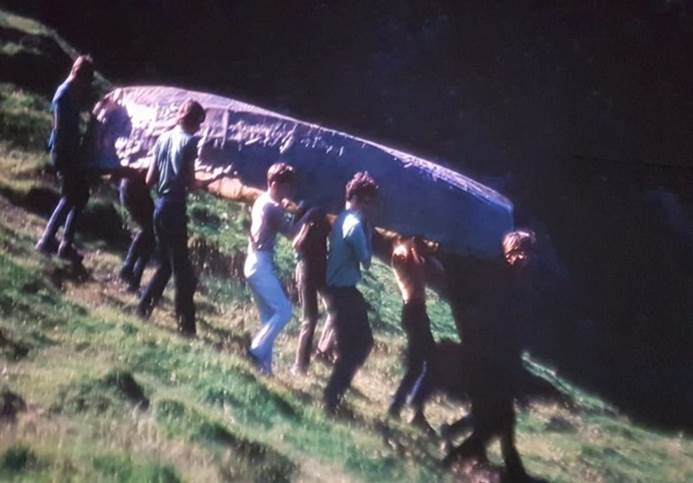


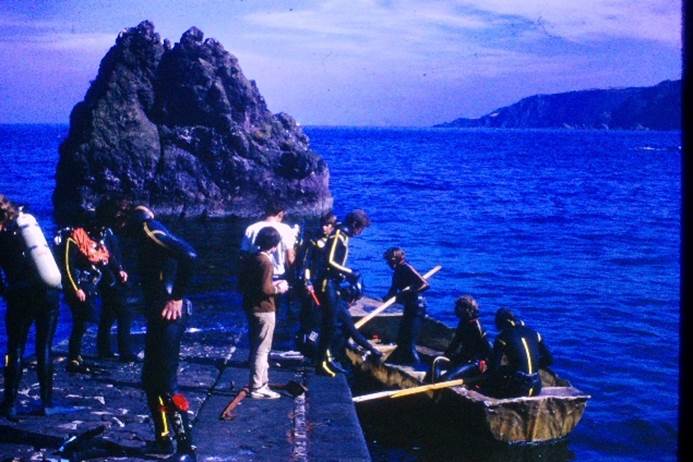

Hiring a bus was expensive, and eventually the Sub-Aqua club obtained the use of a small furniture van and crammed the people and equipment in the back without anything like seats or seat belts. This was before vehicle safety regulations prevented such informal transporting.
Actually reaching diving sites was often problematic. In the early years of the club weekend trips to places like Loch Long were made in a hired bus. The Heriots divers were often accompanied by a group of schoolgirls, almost always from Gillespies for some reason, which made some of the trips home somewhat boisterous. They were know as ‘Associates’ because both they and the Sub-Aqua Group members were associates of the Royal Zoological Society of Scotland.
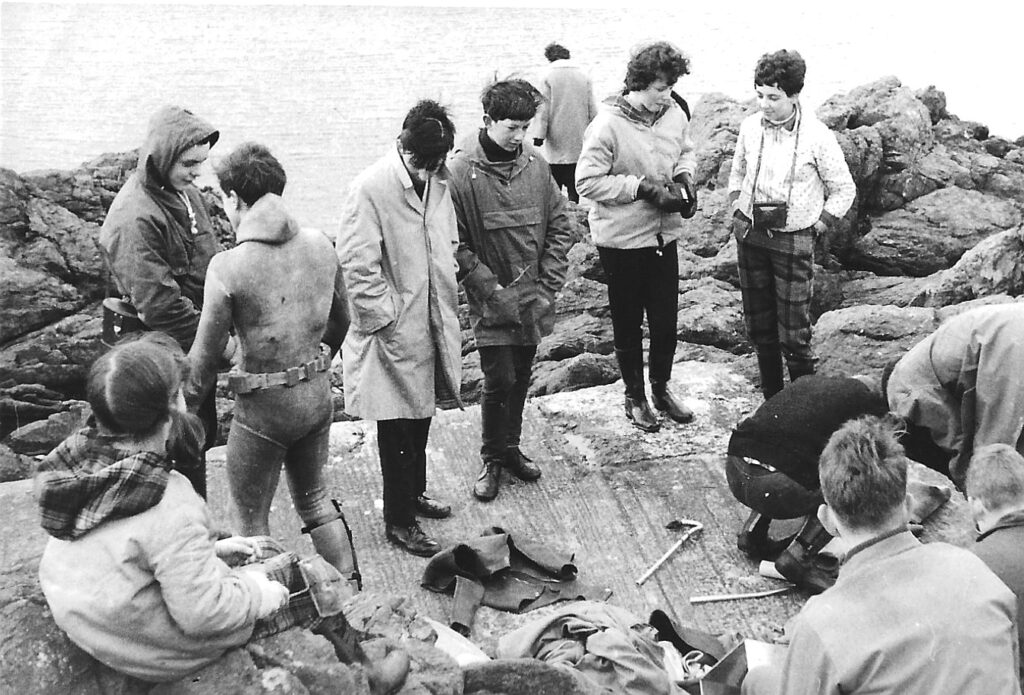
After the furniture van there were two other such vehicles, a van borrowed from Stu’s brother and a lime green Transit van.
Usually this worked fine, but on the trip to Cornwall in 1970 the loaded van wasn’t able to get up the steepest hills. Passengers had to disembark and carry the heavy equipment uphill and sometimes even push start the van. On a subsequent Cornwall trip in 1973 we stayed in youth hostels in Falmouth and St Austell.
When former pupils obtained their own cars this eased the problem, although cramming four people and kit into a Mini wasn’t the most comfortable option.
A trip to the South of France was held in 1976, but the school wisely declined to let the sub-aqua group use a school mini-bus. The expedition did take place, but not under school auspices.
TRAINING THE DIVERS
The amount of time actually spent underwater by members of the sub-aqua group was very small compared to the time spent practising in the school baths, learning about diving theory or marine biology or waiting for your turn to dive. Sub-aqua diving requires physical fitness, familiarity with the equipment and knowledge of how to avoid the dangers of shore diving.
The lecture programme for new divers started by covering basic equipment, snorkelling techniques, wet suits, issues with ears, sinuses and teeth, artificial respiration, rough weather and low visibility.
Once learners had passed the first stage test they went on to consider pressure effects from going underwater, air embolism and buoyancy, signalling underwater, aqualung techniques and respiration/anoxia, again followed by a test. Issues such as how the demand valve works, nitrogen narcosis, the bends, free and assisted ascents, navigation and dive planning were covered in later stages of the theory training. The BSAC manual was used although we could not be members of the British Sub Aqua Club because they didn’t accept under 16s.
As well as doing lots of swimming fitness training during the Thursday club nights in the pool, divers went through a series of tests, including swimming 3 lengths with a 6lb weight belt, recovering six objects from the bottom of the pool and towing a body for three lengths. To show they could use the equipment, they had to flood and clear a diving mask underwater, swim 5 lengths underwater sharing a snorkel with another person without a mask on and do three forward and three backward rolls in one breath.
Once the trainees were fully competent using mask, snorkel and flippers the training progressed to using an aqualung in the school pool. Getting to this stage was eagerly anticipated – the thrill of using an aqualung even in the school pool was an incentive to pass all the practical and theory tests. It was noted in the Herioter report in July 1979 that the majority of new recruits continued to attend the club regularly because the aqualung sessions were held midway through the first term rather than on the first evening.
Easy access to a swimming pool was essential to carry out all this training before people went in the sea. Unfortunately there were long periods when the Heriots school pool was out of action, which restricted activity even when pools at other schools could be used such as arch-rivals George Watsons. Swim training could take place at the Commonwealth Pool, but that didn’t allow use of masks and snorkels, let alone aqualungs.
As well as working through a theory and practical training programme, divers kept their own log of each dive, recording details such as the time and depth as well as notes about the conditions. These notes could include details of the flora and fauna and any other factors. As an example, a lung dive on 18/9/77 at Pettico Wick harbour was recorded as reaching 12m depth and lasting 30 minutes.
“We went straight out (then steer slightly left) down to 9m on stones and red weed, then further on to 12m. Rock faces and dead men’s fingers on far side of central rock. Both large and small fishes, small starfish, lots of sea urchins. Surface to find bearings and then back down and swam across entrance to bay so long snorkel back. Clear water at depth but lots stirred up at edge. Tide full out when we came but one third in by our dive. Roughish at edge and lots of stranded jellyfish but not nearly as rough as Eyemouth on the same day. Sun shining, photos taken.”
While that was maybe more description than most logs, it was very necessary for the group to maintain records of activity so that each person’s progress could be documented. Although the Heriot’s group established its own systems, the tests and recording were comparable to that used by the British Sub Aqua Club (BSAC) which meant that if school pupils went on to join BSAC clubs their logbooks could be used to at least partly meet BSAC requirements.
Sub-Aqua day trips and longer expeditions were often supervised by FPs rather than teachers, so signed permission forms were necessary to ensure that parents knew the situation. Although both aqualung and snorkel diving posed risks, they were no greater than those from some other outdoor activities.
Concern about school trips was heightened in 1971 after the Cairngorm Plateau disaster in which five school pupils and a group leader died on a winter expedition to a remote part of the Cairngorms. Although sometimes arduous, such as the long trek to the Ullapool dive site, nothing more serious than a few bruises and sprains happened on sub-aqua outings.
GAIRLOCH 1960
Weekend diving trips to places such as North Berwick and St Abbs started as soon as the group was formed, and the first longer expedition was for two weeks in Gairloch in Ross-shire in August 1960.
The party assembled on the station platform with an unusual amount of equipment and baggage including cameras and some rather lethal-looking spearguns. Donald McIntyre, who was in charge of the party as Cliff Johnston, the expedition leader, had previously gone up by car to complete arrangements, arrived equipped with two cine cameras. Mr Barr and Mr Welton represented the staff on the expedition.
The main purpose of the expedition was to collect and preserve specimens of the various forms of seaweed and marine life in the loch. ‘This proved a bigger and more difficult task than had been anticipated, but the collection and preservation of the specimens was successfully carried out by the chief dry-land helpers, Gavin Vokes and Richard Cheshire.
Another important part of the programme at Gairloch was the shooting of a cine film. This turned out to be a very successful venture and the filming underwater of such things as seals and dogfish contributed to a very exciting and interesting film being made. The film was eventually shown in the school, where it aroused considerable interest.
Some boys spent a large amount of time spearfishing and crab hunting. We soon found that in the deep, blue water of the Gairloch there abounded fish and crabs in plenty and although there were only a limited number of spearguns these were continually in use. The boys soon learned the art of stalking and hunting the fish through the kelp jungles.
Many enjoyable hours were also spent on board a motor launch, on which we went exploring the coasts which were otherwise inaccessible. The boat was hired from a local boatman and three such excursions were made. The second of these proved extremely exciting.
A party of about ten landed on the Island of Longa just off the coast, while the others departed in the boat in search of a diving area. After about 15 minutes what looked like dolphins were sighted on the port bow. The boat made all possible haste to catch up with these unknown sea creatures – which we later learned from photographs taken that day were in fact the dreaded “Killer Whales”.
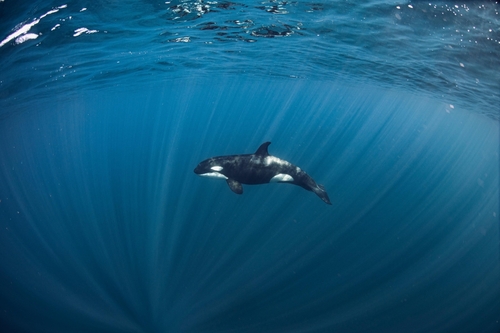
We felt relieved that we had not dived to film them but all the same it was a most exciting experience chasing and taking still photographs of the creatures. The third trip was down to Loch Torridon, where we took underwater cine shots of seals.
GAIRLOCH 1961
Gairloch was visited again in 1961, based at Cairn Dearg youth hostel. The majority of the party arrived there on 20th August in two hired Dormobiles. The advance party of five members made them welcome, and after a quick meal, the party settled down in the annex.
The first day was spent in organisation, though most of the members took advantage of the weather to have a short dive. In the following days, however, the expedition got into full swing despite the very changeable weather and choppy seas.
Excursions were made to North and South Erradale and to Loch Ewe. Part of the group endeavoured to reach Rona, but the boat hired for the occasion was unable to leave the shelter of Gairloch Bay owing to very heavy seas. Some members dived at the harbour and succeeded in finding and marking a German field gun, once a war trophy, which had been fouling nets and ropes. Tools were also salvaged for a gang of workmen, together with a large transformer.
During the second week, the party went further afield to Melon Udrigle and Leurg on Loch Ewe in search of calmer diving conditions. Here the group enjoyed ideal spearfishing conditions and excellent scenery for underwater filming. The south side of the bay and Longa Island were also visited.
During the stay, several hundred feet of cine film were shot. The biological section was also very active. Surveys of the fauna of the bay and an algal survey of Gairloch, with emphasis on the red seaweeds, were completed. Many specimens were brought back, and the members working for the Zoo project brought back many live specimens, including two large dogfish which were caught by hand.
Subsequent to that trip Heriots trust minutes recorded concern that a “new and unexpected situation had been created by a change of ownership since 1960”. These minutes didn’t give any further detail of the incident, and a subsequent minute recorded “… the incident as closed.”
ISLE OF SKYE 1962
Based at Staffin Youth Hostel, the expedition carried out more filming but also experienced some poor weather.
ISLAND OF MUCK 1963
1963 Island of Muck Expedition Report
The scientific work of the Sub-Aqua Group was first documented in a 1963 report on “The Marine Fauna and Flora of The Isle of Muck”, edited by Cliff Johnston with section recorders Douglas Heggie and Neil Collier. This relates to the group’s fourth summer expedition to the Island of Muck off Mallaig, selected at the suggestion of the Nature Conservancy.
The islanders and Commander MacEwan the laird of the Island showed great interest in the expedition and their hospitality included a ceilidh at which Douglas and Stewart Evans sang a Gilbert and Sullivan duet.
Several hundred feet of colour movie film was shot alongside the natural history survey project. The report notes that the situation of the island makes it exposed to severe winds off the Atlantic, but because of its low altitude it often escapes the heavy west coast rains.
For each species of animal or plant recorded the position on the shore or underwater was noted, along with a simple habitat description and an estimate of frequency. The island and surrounding sea was divided into 26 survey zones. 169 different animal species were recorded, ranging from orange pipe sea sponges to grey seals and including 23 types of fish. 88 species of seaweed were recorded, including 43 species of red algae.
Over the two and a half weeks of the expedition it wasn’t possible to cover the complete fauna and flora of Muck, but they did find many species generally found only in Southwest England. These included Devonshire cup coral, gem anemones, European spiny lobsters, purple sea urchins and shore clingfish. Aqualung diving enabled them to study underwater habitats such as the kelp forests in far more detail and less destructively than would have been possible using trawls or grabs from the surface.
EILAN NAN RON 1964
Eilan nan Ron is a small uninhabited island near Colonsay. This was a challenging expedition site for the school group. Poor weather and force nine gales turned their holiday into something more like a survival course than a Sub-Aqua Group expedition.
Because the island was uninhabited all provisions had to be taken with them on the boat, including drinking water, and they were totally reliant on that boat being able to return and land in order to pick them up at the end of the week.
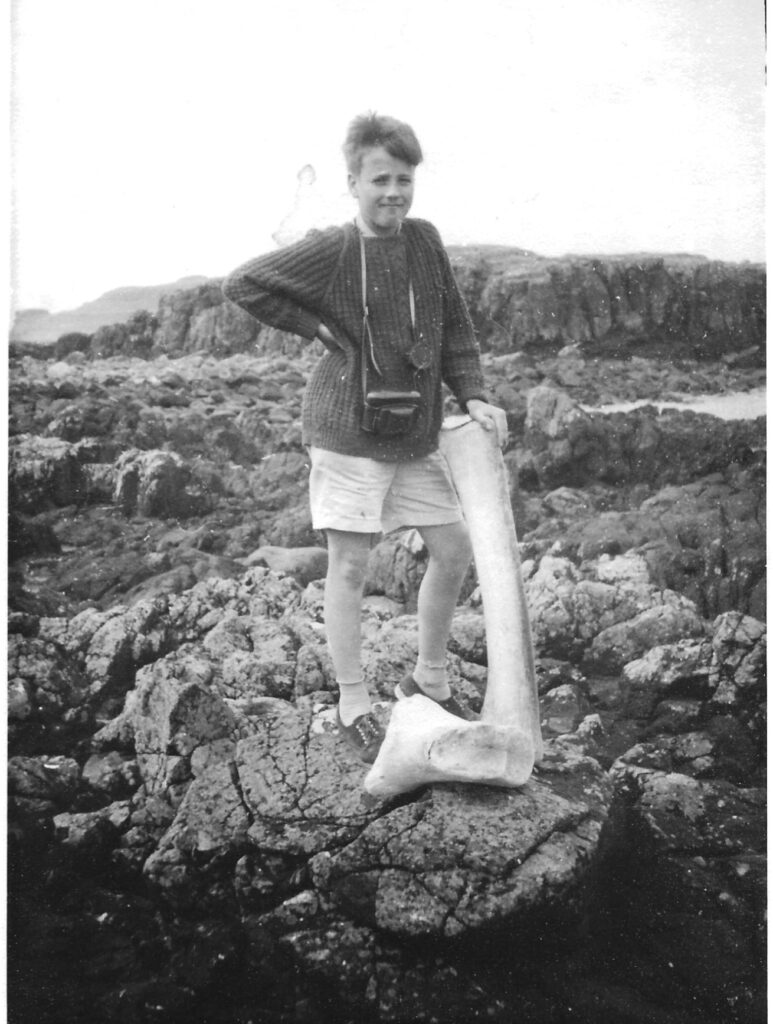
The gales created havoc in the tents and we were forced to repair an old cottage with driftwood rafters and a plastic roof. This cottage saved the day as we then had dry quarters in which to cook and eat. Because of the storms we were able to make only limited use of a special underwater cine camera lent to us by a research organisation. With this camera they had hoped to make a film of the breeding habits and general life of the grey seals which, though common around British shores, are very rare elsewhere in the world.
However, their ” Kelp Jungle ” study which was an investigation of the abundant marine life living under the protection afforded by the six to ten foot high seaweed, was particularly successful.
LANZAROTE 1965
1965 Canary Island Biological Expedition Report
Islands In The Sun – a more detailed Herioter report
Now that the Sub-Aqua Group had mounted several survey expeditions to remote Scottish locations, their ambitions were raised to another level in the summer of 1965.
Nine school pupils were included in a 15-person expedition for 6 weeks organised by Dr Cliff Johnston to study the flora and fauna of Lanzarote, one of the northern Canary Islands.
Grants were obtained from a wide range of sources including the Royal Geographical Society and Salvesons of Leith. The Duke of Edinburgh agreed to be a patron for the expedition which helped raise further sponsorship including some grants in kind from food manufacturers. This included a large box of cans of beer, most of which was surprisingly untouched by the end of the trip. They were limited by currency regulations to a £50 maximum per person, so they each had to carry their share of the group money in travellers’ cheques.
They travelled to Lanzarote on a Spanish ship, t.n. Begoña. They had to use Spanish and were very glad to have their interpreter, John Buchanan, who had just left Heriots, to help in their encounters with the ship’s personnel. As the ship and most of the passengers were Spanish, the food also was Spanish – stewed octopus was the main dish at their first meal!
By the end of a week the party was split into three categories those who liked the food, those who tolerated it, and those who did not bother to attend meals, albeit sometimes because their digestive systems were in no state to accept food anyway.
On arrival at Arrecife, the main town of Lanzarote they were greeted by a Spanish Government delegate, the local chief of police and the head science teacher of the local school.
One official formality was an invitation by the local authority to visit their desalination plant, but under strict instruction not to take photographs of this vital asset. In spite of this stipulation a snap was obtained of what looked like a small-scale Grangemouth to show their independent spirit.
The expedition based itself in the village of Arrieta, and were allowed to use a very conspicuous red, yellow and blue building on the edge of the sea.

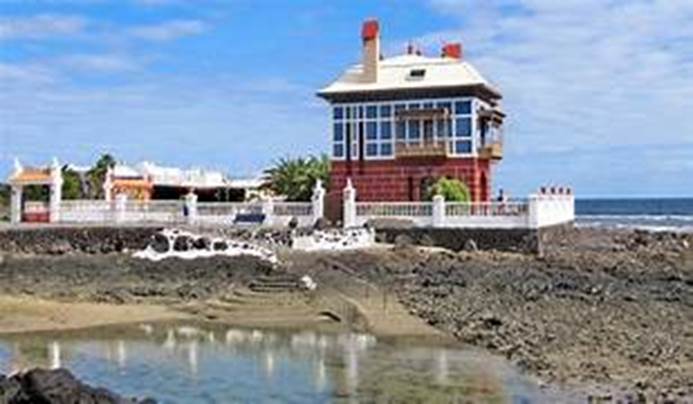
The driver of their locally hired minibus was also a keen spear fisherman who advised on good diving areas around the island.
In 1965 the volcanic island of Lanzarote had not become a tourist destination although the sea was perfect for diving with very clear water. Snorkel divers without wet suits discovered that the Canaries are bathed in a cold northerly current and felt far from balmy.
Divers could manage to reach 50-60 feet depth using only snorkels, and the record snorkel dive approached 90 feet. A lot of the survey work was carried out using aqualungs, although it was so hot during the day that the air cylinders had to be charged overnight.
The scientific survey report from the expedition covered 12 different areas of the island and 200 seashore communities were examined and specimens collected. The final expedition report by Cliff Johnston, John Duffus and Douglas Heggie was an extremely comprehensive account, covering local geography, astronomy and ornithology as well as the marine biology and ecology.

Although biological studies had been made in the Canaries in the past, there hadn’t been any marine studies of Lanzarote since aqualung diving became available. The introduction of these techniques meant that very detailed studies could be undertaken in the sub-littoral region. Lanzarote was chosen as it was the island that had probably received the least attention from large-scale surveys and its sheltered eastern position and low-relief coastline made it an obvious starting point for the use of diving techniques, especially from a land-based expedition.

The marine biological survey involved the detailed examination of the littoral and sublittoral shoreline at 10 different localities on Lanzarote plus similar studies on Graciosa and Montaña Clara, two islets to the north of Lanzarote. The Expedition Report was therefore a very significant contribution to the recorded marine ecology of Lanzarote.
1966 SKYE
Unlike some previous expeditions, this July trip experienced two weeks of beautiful weather, based at Staffin youth hostel. The scallops that had been collected by the divers were much admired by hostellers eating tinned beans and sausages. Iain Morrison (PhD Archaeology/ Geography/ Geology) introduced photogrammetry there before deploying it for surveys on the 1967 Canaries expedition. The expedition’s main scientific aim to make a census of the molluscs in the area for the Conchological Society of Great Britain and Ireland-was achieved.
CANARY ISLANDS 1967
1967 Canary Island Biological Expedition Report
Return to the Fortunate Isles – more detailed Herioter report
Seven school pupils took part in this expedition, the remainder of the 22 members were graduates from Heriot Watt University, led again by Dr Cliff Johnston. Half the party returned in late August with the remainder staying for the full three months.
It was based in the same building in Arrieta on Lanzarote as in 1965. In the report published in the Herioter it was noted that there were growing signs of commercial tourism on the island, with increasing numbers of restaurants and night clubs and more litter.
The major project carried out was a study of the oxygen production of seaweed samples at different depths during fixed periods of exposure to sunlight. An investigation was made of the distribution of molluscs on different seaweeds, and their digestive capabilities. Most of this was done locally, using chemicals brought out by us including perchloric acid, which the ship stored in the paint store.
Survey methods which had not previously been used underwater were applied. These included the use of the technique of photogrammetry in which a series of photographs was taken of small areas containing scaled markers, so that accurate plans could be made of seaweed distribution.
Photographic techniques were used widely to record specimens. Over 6,000 colour slides were taken under water and on land, and over 2,000 black-and-white photographs were shot. Russian camera equipment lent to the expedition was used for much of this work and for the shooting of a short 16mm cine film using a Bolex camera with turret lens. A study was also made of the fisheries of the Canary Islands. Most of these studies involved a large amount of diving work.
Unfortunately, just as members were getting settled in to the work of the various projects, the main expedition air compressor decided that Lanzarote dust and air did not agree with it, and a high-pressure tube blew up rather spectacularly. A small reserve compressor was used until it too fell victim to the rigours of expedition use. It was only a fortnight before the end of the expedition that a replacement compressor unit arrived from Britain, and the divers had more air than they could use.
Using a triple aqualung set, one dive at 110 feet of over 30 minutes duration was recorded, and on another occasion a depth of 160 feet was reached. However, most of the expedition work was carried out at depths of not more than 100 feet, using snorkel diving techniques for much of the time.
In the preliminary report of that expedition, it is noted that three main studies were carried out: ecological distribution and primary production of benthic marine algae; biochemical and ecological study of marine benthic molluscs and their feeding habits; and a general study of marine flora and fauna.
Diving was particularly suitable for the mollusc survey, as samples of the animals and what they were feeding on could be collected in situ. Aspects of local fisheries were also studied, and it was noted that growth of fishing and fish processing could act as a stabilising point in an expanding economy much dependant on the growth of tourism.
CANARY ISLANDS 1969
Six people went on this expedition, with Andy Haxton returning early to start his sixth year at school and the others staying a full three months to conduct a survey of the seaweed and shellfish of the region. The islands studied were the three most westerly of the archipelago, – La Palma, Gomera and Hierro. Previous expeditions in 1965 and 1967 had investigated the easternmost island, Lanzarote.
CORNWALL 1970
The climax to the second term was the Easter expedition to Cornwall. Fifteen divers travelled down by van along with a great deal of equipment, stopping overnight in Blackpool. They stayed in two hostels during their eight-day visit and dived at various places on both the north and south coasts, finding excellent conditions at all dive sites, although the north coast tended to be rougher. They returned to the Lizard for a second visit as there was a large amount of plant and animal life, including wrasse and flatfish, and also exceptional visibility.
CORNWALL 1973
The summer expedition in 1973 returned to Cornwall for a fortnight staying in Youth Hostels. They went to different dive-sites nearly every day, experiencing a wide range of underwater scenery. The conditions were also greatly varied, from calm waters with good visibility to rough with poor visibility.
OBAN AND LOCH LONG TRIPS
Oban was a regular at September weekends, including one when the van broke down, and Kenny MacLachlan was waiting at Grangemouth; an overnight repair allowed a Saturday departure. We usually stayed in the campsite at Ganavan Sands. We sometimes visited the Soroba House Hotel. PhD students were involved in some of the Oban trips.
Trips also went to Seil Island near Oban where the quarry provided deep diving practice sheltered from the open sea.
Loch Long was another day trip location.

A UNIQUE EXPERIENCE
Sub-Aqua diving was an unusual activity for a school club. School pupils had the opportunity to go underwater in Scotland or further afield, but also to take part in weekly evening training sessions. During term time there were regular Sunday trips to St Abbs and other dive sites.
The majority of organisation of the Sub-Aqua Club was provided by former pupils. One former member commented that “this was a great attraction to me, the lack of teachers involved.”
Some of our activity might not have met with official approval, such as Thursday evening pool training meetings ending up in the Last Drop in the Grassmarket.
But for nearly 25 years the Sub-Aqua Group enabled Heriots pupils to undertake a pioneering activity which deserves to be recorded as a very worthwhile achievement.
FOOTNOTE
This article started out when I assembled a set of Sub-Aqua Group reports from the Herioter after reuniting with some of the people I had dived with at school between 1968 and 1977.
Further research led me to some of the published reports from group expeditions. Thanks to Douglas Heggie who was in the group until 1965 and went on the first trip to Lanzarote and to John Buchanan who was involved as a school pupil then as a teacher.
Along the way I made contact with other Sub Aqua Group members and passed round the draft of this article for comments and further suggestions.
Thanks to Doug, Eric, Jim, Derek, Peter and Laurence for these reunions, and to the memory of Gary Rose, Andy Mackie, David Grubb and others whose swimming days are sadly over.
Please contact me if you have further information or photos from the GHS Sub-Aqua club activities – my email is imaxwell[at]gn.apc.org.